When tomato season is at its peak and your tomato harvests are piling up, turning beautiful fresh tomatoes into flavorful dehydrated tomatoes is one of the best ways to preserve summer. Whether you grow your own, picked up pounds of tomatoes at the farmers’ market or grabbed extra from the grocery store, drying them is an easy way to create pantry-ready flavor for months. This method uses quartered tomatoes and whole cherry tomatoes, dried at 165°F in a food dehydrator, with just a little sea salt — nothing else. We prefer to get our tomatoes to a soft but not brittle consistency. We then store them in garlic oil for use in sauces. We freeze the dried tomatoes to bring out in the winter.
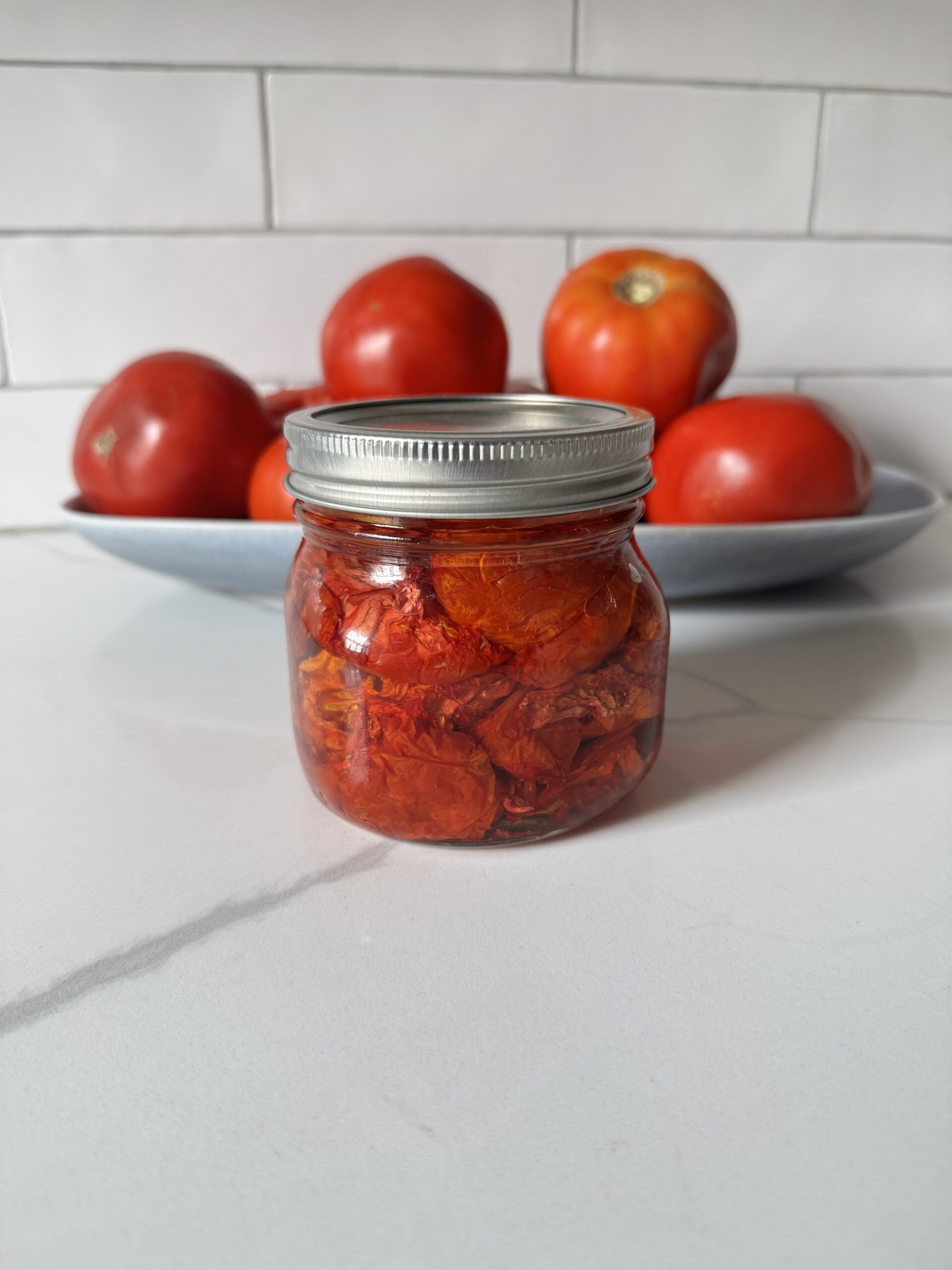
Choosing the Best Tomatoes to Dehydrate
- Roma tomatoes – A classic good paste tomato with thick flesh, few seeds, and low moisture. They dry evenly and create deeply concentrated, flavorful dehydrated tomatoes.
- Medium-size plum tomatoes – Firm and meaty with balanced moisture, they hold their shape when quartered and produce tender but sturdy dry tomatoes.
- Other paste tomatoes – Naturally lower in water and higher in flesh, paste tomatoes dry faster and deliver intense flavor without excessive shrinkage.
- San Marzano tomatoes – Known for their natural sweetness and low acidity, they become rich and almost jammy when dehydrated, making them perfect for pasta dishes and sauces.
- Medium varieties of tomatoes with an oblong shape – Their meatier interior and lower moisture content make them reliable for consistent drying and excellent texture.
- Whole cherry tomatoes – Small but packed with flavor, they turn into intensely sweet dehydrated cherry tomatoes that rehydrate beautifully in olive oil.
- Grape tomatoes – With thicker skins and firm flesh, they hold up well during the drying process and develop a bold, slightly tangy sweetness.
- Other small tomatoes – Because of their size, they dry quickly and create bite-sized pieces that are perfect for tossing into pasta salads or blending into tomato sauce.
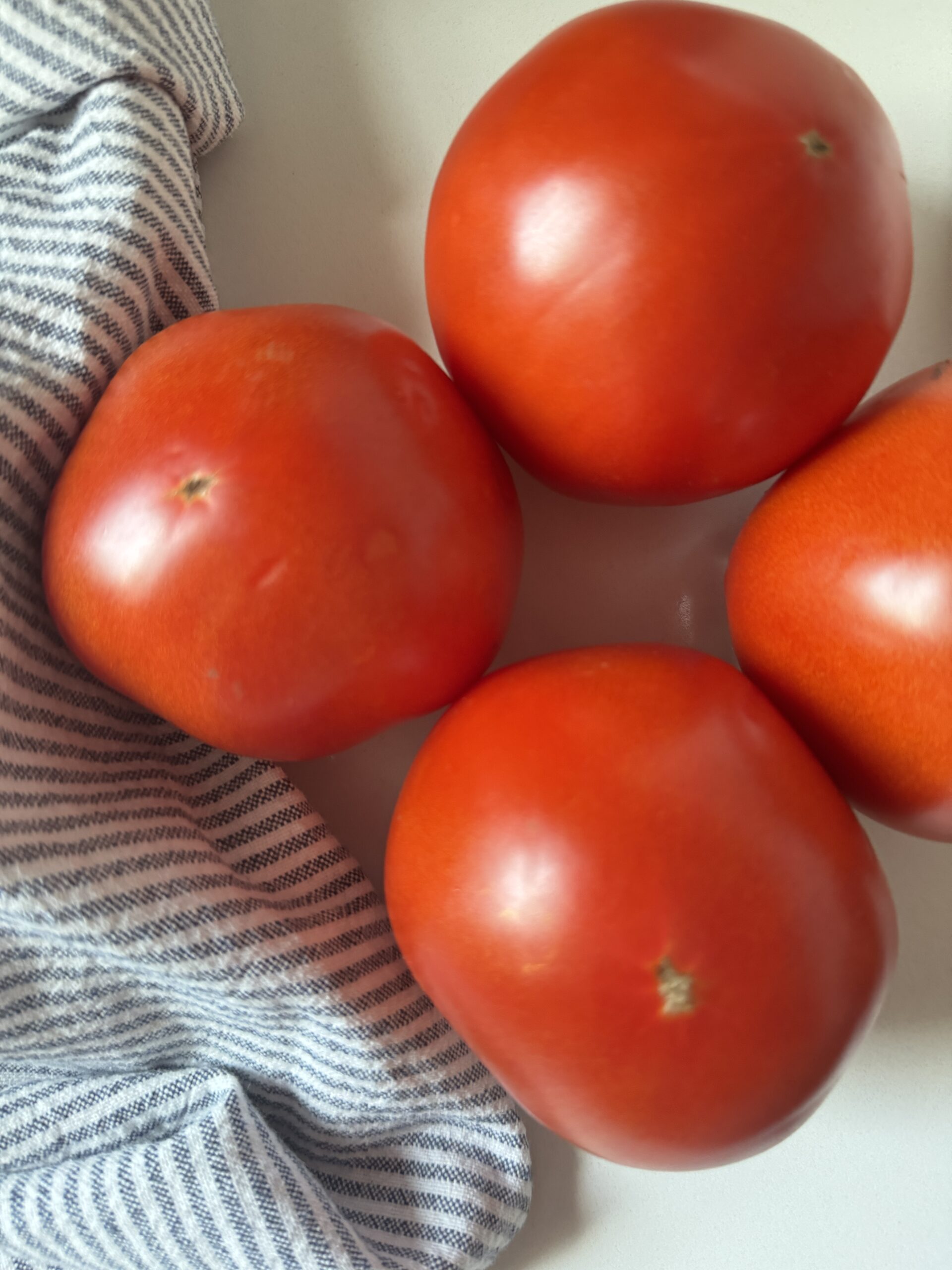

Prep: Quartered, Not Sliced
-
Rinse tomatoes in cold water and pat dry.
-
If using roma tomatoes, cut the tops off, and slice in half, if small. If larger, cut in half longways then cut in half again.
- If using larger tomatoes, core, then quarter, and cut into small pieces.
-
Leave whole cherry tomatoes and grape tomatoes intact, removing any stems that may be in place.
-
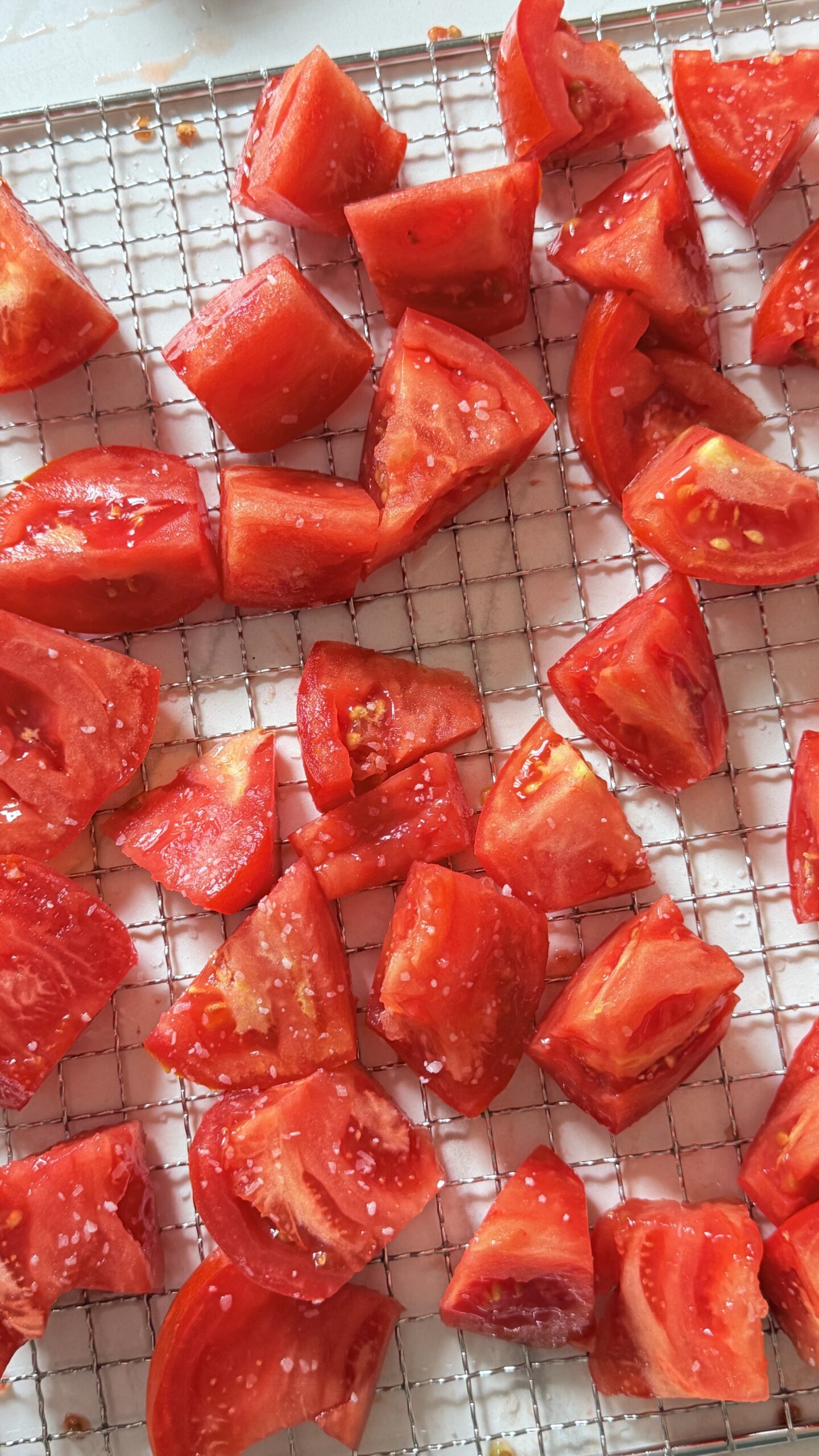
Arrange with the skin side down and the cut side up (for quartered pieces) on the trays for your dehydrator.
Dehydrating Tomatoes at 165°F
Using a food dehydrator or electric dehydrator is the most reliable method. If you’ve invested in one of the best dehydrators or a new dehydrator, this is where it shines.
-
Arrange tomatoes in a single layer on dehydrator trays
-
Sprinkle with a very small amount of kosher salt
-
Leave enough space between pieces
-
Use a silicone mesh sheet for small tomatoes
-
Set to a low temperature of 165°F
Because 165°F is a stronger heat source than traditional low-temp drying, expect a shorter drying time — usually 6–7 hours depending on moisture level and thickness.
In climates with dry air, they may finish faster.
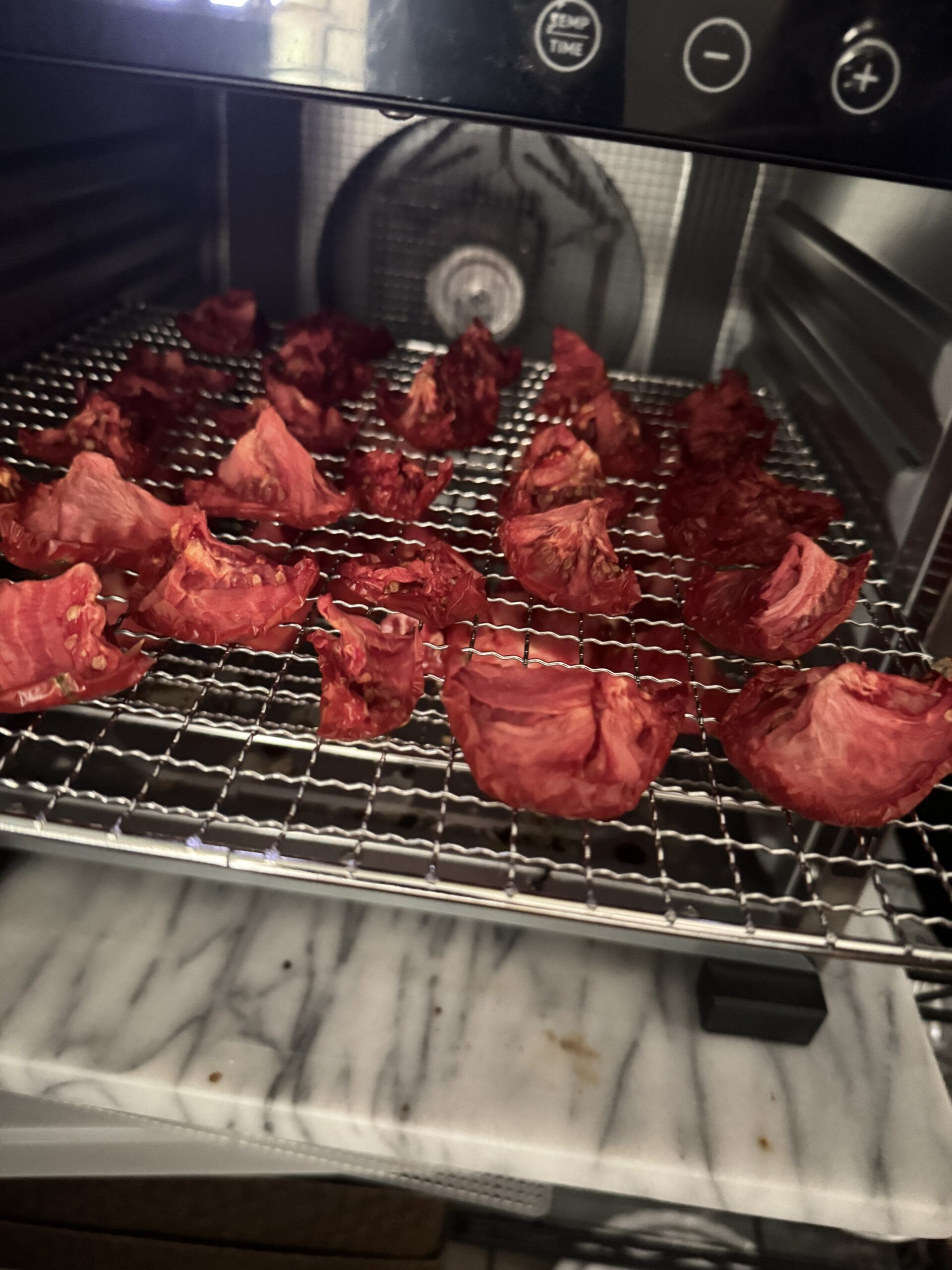
How to Know They’re Done
Your dry tomatoes are ready when:
-
They feel leathery but not brittle.
-
There is no visible noticeable moisture-no juice coming out.
-
They are concentrated and pliable-think prune or raisin.
You’ve now created homemade sun-dried tomatoes — a true better sun-dried tomato than most store-bought versions.
How to store Dehydrated tomatoes longer
Vacuum Sealing & Freezing
When you want your tomatoes to be a bit more plump, like a roasted tomato that you get at the deli counters, you will need to store them in the freezer for long term storage, or the fridge for short term.
Steps:
-
Cool tomatoes completely.
-
Portion into vacuum bags or sturdy freezer bags.
-
Remove as much air as possible.
-
Seal and freeze flat.
You can also use heavy-duty zip-top bags, but vacuum sealing protects flavor and prevents freezer burn.
Using Them Straight from the Freezer
This is our favorite way to use them in everyday cooking.
-
Pull a handful of frozen dehydrated tomatoes.
-
Place into a small bowl or a small jar.
-
Cover with good olive oil.
-
Let sit 10–15 minutes, or overnight in the fridge.
-
You can also place the tomatoes in garlic oil in the fridge.
No need for warm water — the oil softens them gently and becomes infused with concentrated tomato flavor.
Here are some of our favorite recipes to use these tomatoes in:
Can I make these if I do not have a Dehydrator?
Yes! If you don’t have a food dehydrator or electric dehydrator, you can absolutely still make these!
Use Your Oven (Most Practical Option)
A regular oven — especially a convection oven — works very well.
How to do it:
- Preheat to the lowest oven temperature possible (ideally 170–200°F).
- Line baking sheets with parchment paper.
- Arrange quartered roma tomatoes, plum tomatoes, or San Marzano tomatoes in a single layer, skin side down.
- Leave whole cherry tomatoes intact and spaced out.
- Lightly sprinkle with sea salt only.
Drying time can take 6–12 hours depending on size and moisture content. Rotate trays every couple of hours for even drying. They’re done when leathery with no noticeable moisture. This is an easy way to make homemade sun-dried tomatoes without special equipment.
Use an Air Fryer with Dehydrate Setting
If your air fryer has a dehydrate function:
- Set to 160–170°F.
- Arrange tomatoes in a single layer.
- Dry 4–8 hours depending on size.
Because space is limited, you’ll likely need multiple batches — but it works surprisingly well for small tomatoes like cherries and grapes.
Sun Drying (Old-School Method)
If you live in a hot climate with very dry air, you can sun dry.
- Place tomatoes on racks in a single layer.
- Cover with cheesecloth to protect from insects.
- Bring inside at night.
- Repeat for several days.
This traditional method works best during peak tomato season when temperatures are high and humidity is low.
Important Tips Without a Dehydrator
- Choose meatier paste tomatoes with less of a lot of water.
- Cut medium tomatoes into quarters, not slices.
- Leave whole cherry tomatoes intact.
- Always use just a little sea salt — no seasoning.
- Make sure tomatoes cool completely before storing in an airtight container.
- Store in a dark place at room temperature, or vacuum seal and freeze for long-term storage.
You don’t need fancy equipment to make incredible dry tomatoes. With just your oven and a little time, you can preserve the flavor of summer and have rich tomatoes ready for olive oil, pasta dishes, and homemade tomato sauce anytime.
Final Tips for Best Results
-
Quarter medium tomatoes instead of cutting into inch slices
-
Whole cherry varieties make incredible dehydrated cherry tomatoes
-
Leave enough space on trays
-
Avoid overcrowding
-
Check carefully for lingering noticeable moisture
-
Store backup pantry batches in paper bags inside a cool cabinet if needed
-
Label with a simple recipe card for easy reference
Drying tomatoes is one of those great things that transforms extra produce into flavorful dry foods you’ll reach for all year. With minimal prep time, a steady 165°F heat source, and just a little sea salt, you can preserve the very best of tomato season — ready to elevate every bowl of pasta whenever you need it.
Equipment
- Dehydrator
- Wire cooling rack
Ingredients
- 2 pounds Tomatoes
- 1 teaspoon kosher salt
- 1 cup extra virgin olive oil
Instructions
- Rinse tomatoes in cold water and pat dry.
- If using Roma tomatoes, cut the tops off, and slice in half, if small. If larger, cut in half longways then cut in half again.
- If using larger tomatoes, core, then quarter, and cut into small pieces.
- Leave whole cherry tomatoes and grape tomatoes intact, removing any stems that may be in place.
- Arrange with the skin side down and the cut side up (for quartered pieces) on the trays for your dehydrator.
- Arrange tomatoes in a single layer on dehydrator trays
- Sprinkle with a very small amount of kosher salt
- Leave enough space between pieces
- Use a silicone mesh sheet for small tomatoes
- Set to a low temperature of 165°F
- Set for 5 hours, then check. May take 6-7 hours depending on the climate you live in
- Keep in refrigerator. Oil will solidify, so just bring to room temperature to use.
Nutrition
Sunday Sauce (Slow-cooked Tomato Sauce Recipe)
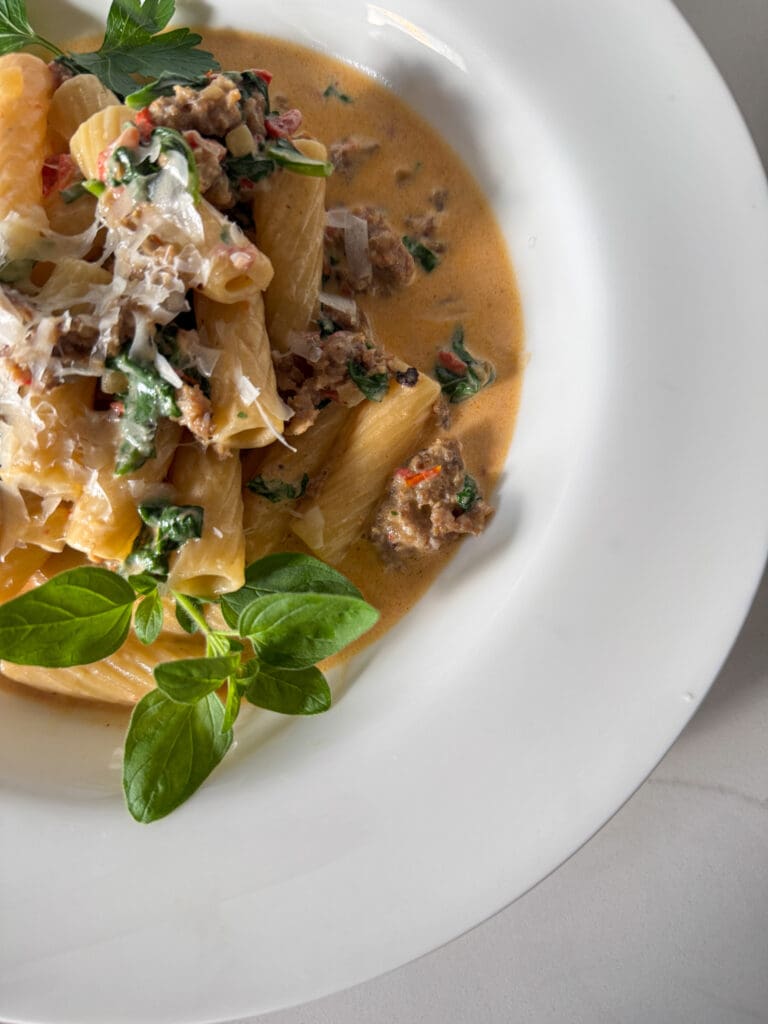
Spicy Chicken Sausage Rigatoni with Sundried Tomatoes
Sunday Sauce (Slow-cooked Tomato Sauce Recipe)

[…] of Flavor: The combination of tomato paste, diced tomatoes, and roasted tomatoes adds layers of tangy, sweet, and umami […]